
It is the first question every property owner asks, and the one most vendors refuse to answer in public: what does a transparent LED display actually cost? The honest response is that there is no catalog price — and anyone who quotes you one without seeing your building is guessing.
That is not evasion. It is how this technology works: the display is built onto your glass, and the number is built from it too. Here is what actually shapes the price, and the fastest way to get from curiosity to an exact figure.
The short answer: it starts with your glass
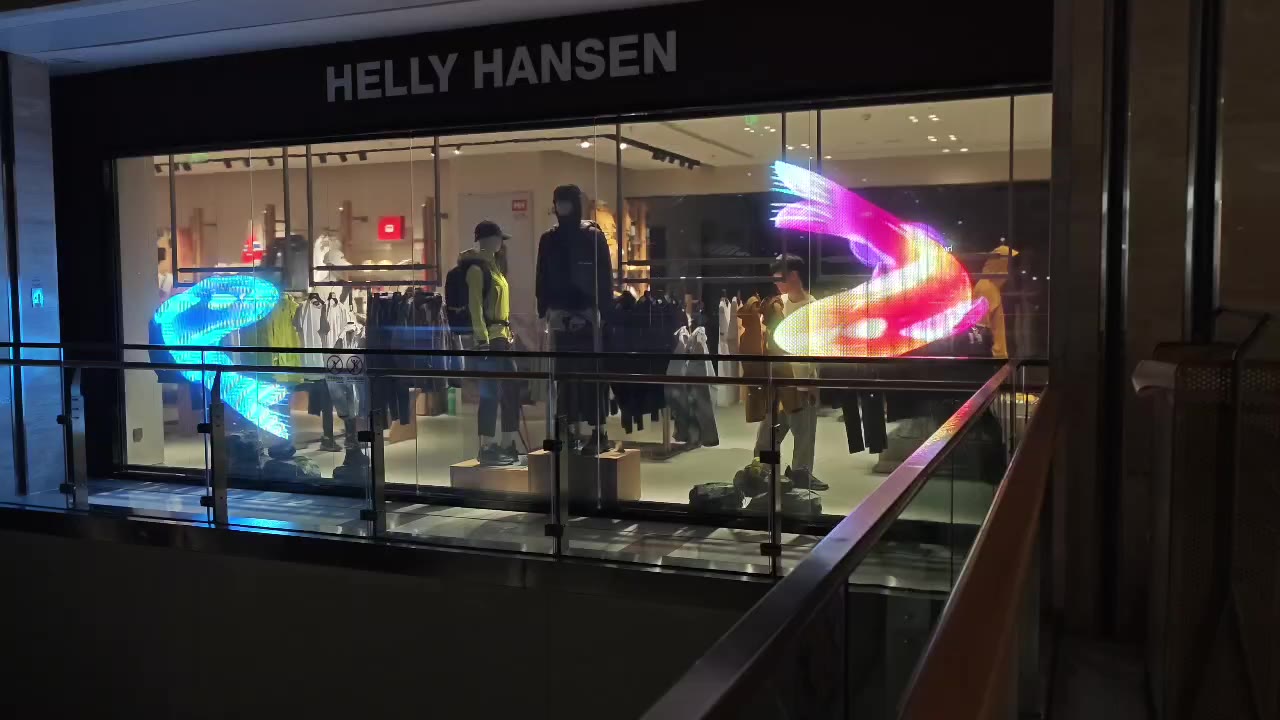
Transparent LED is applied directly onto existing glass — film laminates onto the surface, transparent LED mesh mounts onto storefront glazing and curtain walls. The glass stays glass; the window keeps doing its job and becomes a screen on top of it.
Which means the single biggest cost driver is simply how much glass you want to cover. A restaurant's facade window is one project. A dealership's full showroom wall is another. A multi-story glass facade is a third. Same technology, very different numbers — and that is exactly why prices belong in a conversation about your building, not in a price list.
Where it earns its keep
Because the display lives on glass you already own, the strongest cases are businesses whose best advertising surface is their window:
- Restaurants and cafes — cover the facade window and run whatever the evening calls for: the menu at lunch, ambience and motion after dark, a private-event mode on demand. The room stays visible behind the content, so the space never feels closed off.
- Automotive dealerships — showroom glass becomes a brand channel: launches, offers, cinematic content at night, while the cars remain in view. We covered this in depth in our guide to transparent LED for dealerships and retail.
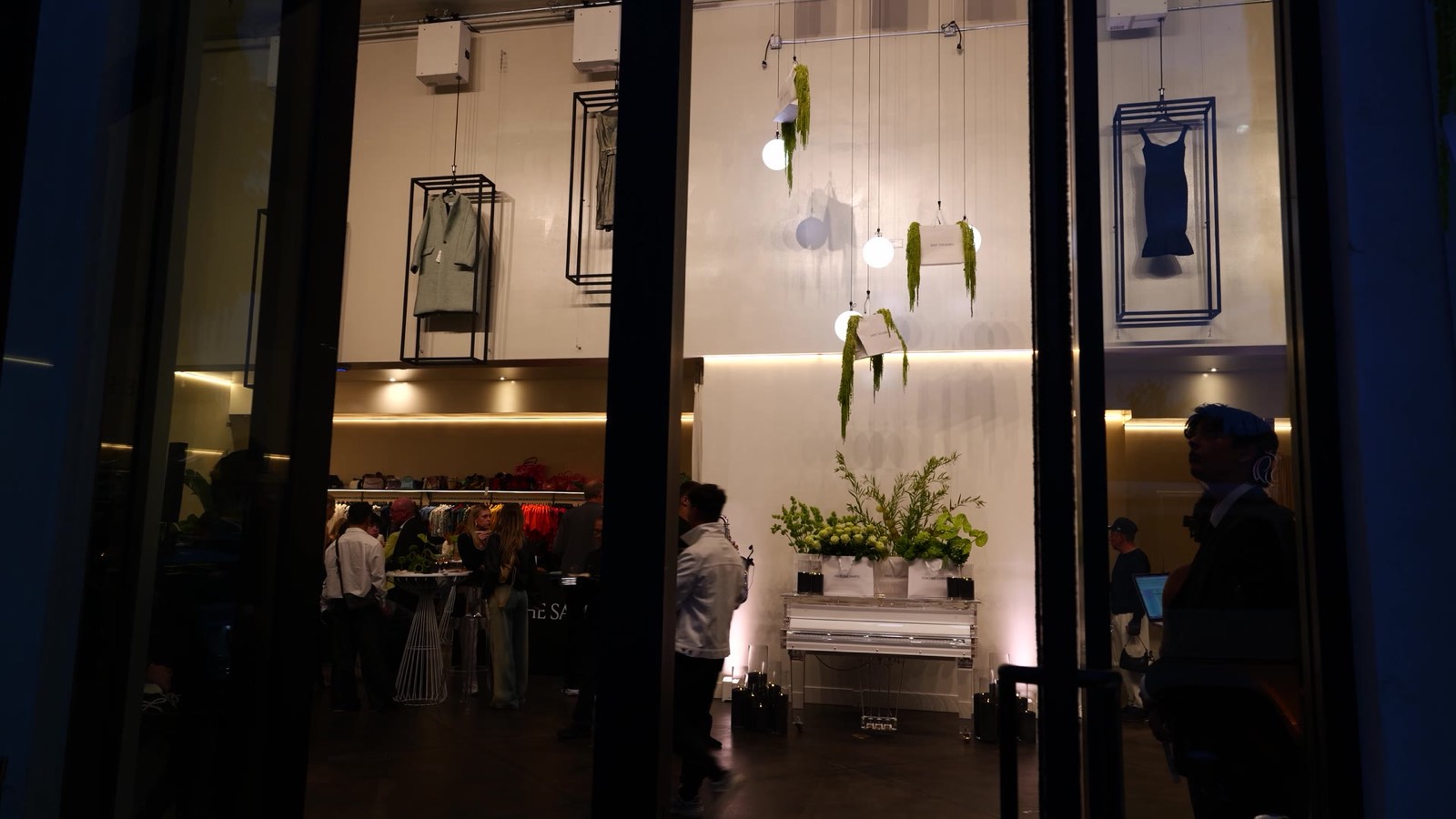
- Retail storefronts — campaigns, product drops, and seasonal storytelling refreshed as often as the marketing calendar demands, at content-production cost rather than construction cost.
The six factors that build the number
1. Film or mesh
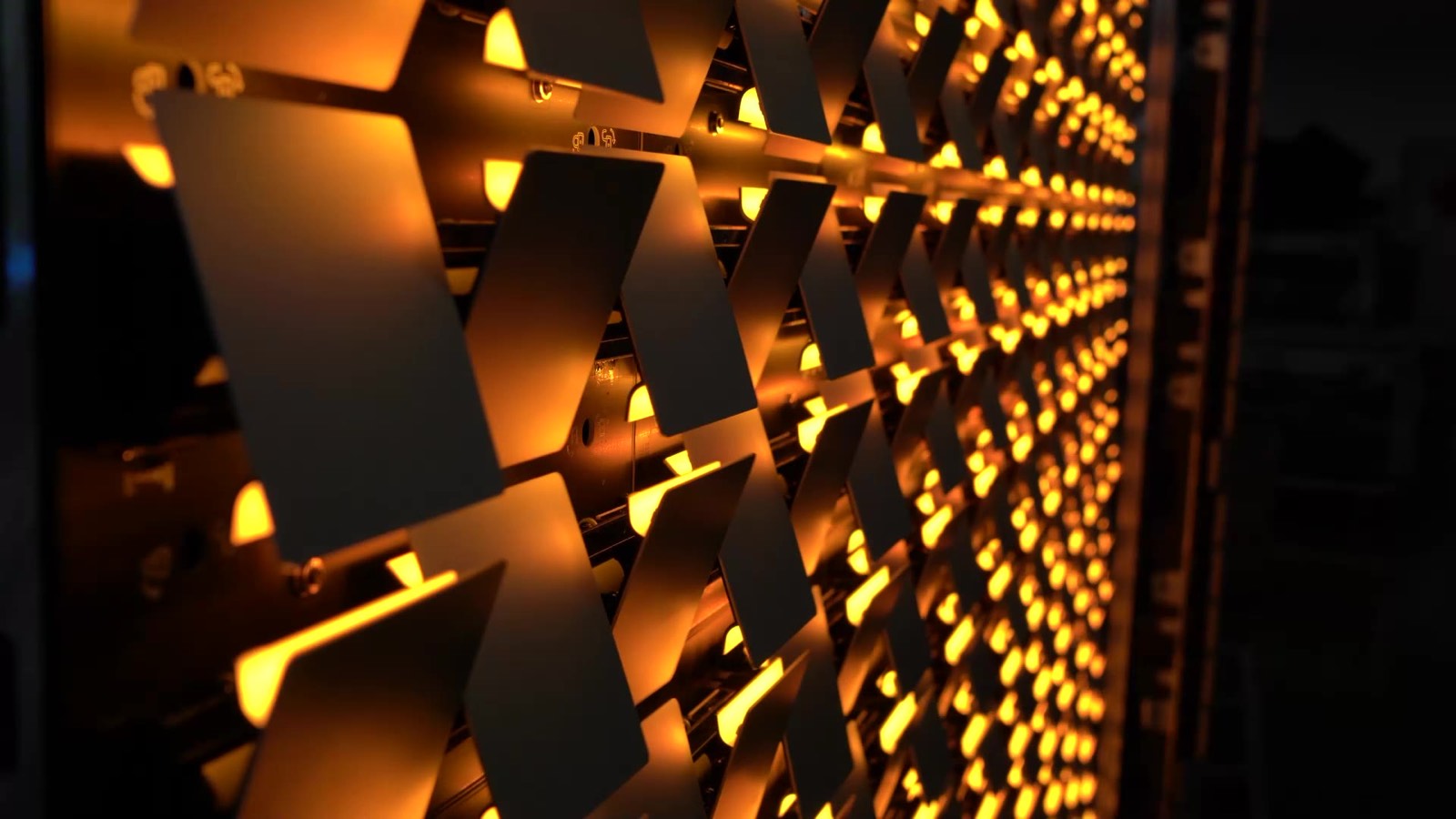
The two leading transparent technologies are constructed differently and priced differently. Film is an ultra-thin pixel layer glued to the glass — the least visually intrusive option, and the one that follows curved glazing. Mesh is an open lattice of LED strips — ours runs above 80% transparency at 5,000–5,500 nits, light enough to mount onto existing storefronts without rebuilding the facade. They suit different glass and different ambitions, and choosing the wrong one is the most expensive mistake available in this category. Our film vs mesh guide covers the decision in depth.
2. Pixel pitch — the biggest lever after size
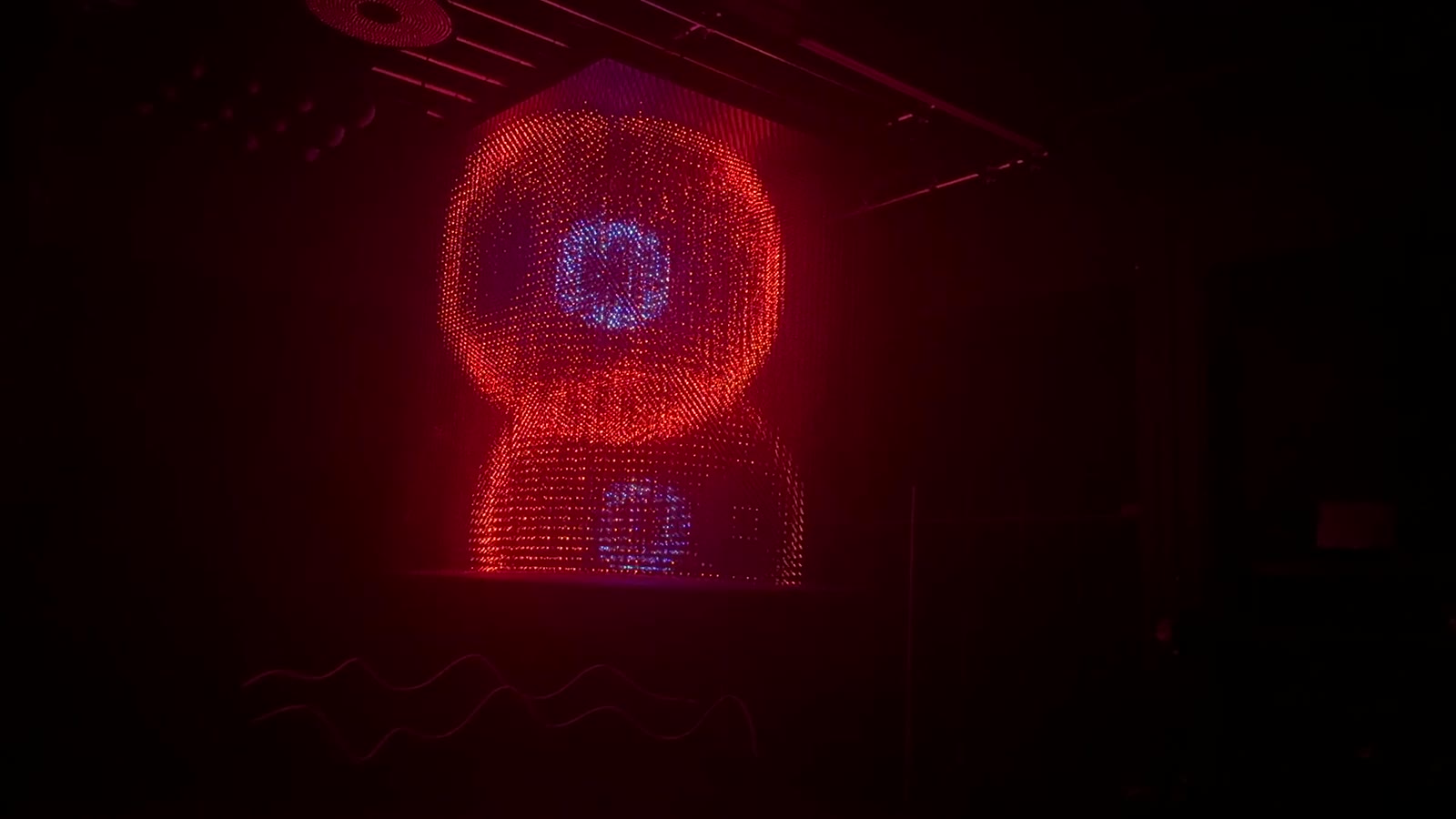
Pixel pitch is the distance between pixels, and it drives cost steeply: halving the pitch roughly quadruples the number of LEDs per square meter. The discipline is to match pitch to real viewing distance. A facade read from across the street does not need the pitch of a display case read from one meter away — and paying for resolution nobody stands close enough to see is the most common way budgets inflate.
3. Size and shape
Cost scales with area, but not linearly — fixed costs like engineering, control hardware, and mobilization spread across more surface as the project grows. Custom geometry pushes the other way: curved glazing, unusual panel shapes, and irregular layouts add design and fabrication work that standard rectangles avoid.
4. Brightness
Content that must win against direct Southern California sun needs 5,000+ nits; an interior atrium can look spectacular at a fraction of that. Brightness costs money twice — once in hardware, again in power — so specifying it honestly, rather than maximally, protects both budgets.
5. The building itself
This is the part no online calculator sees. Mounting method, the condition and type of the existing glass, structural capacity, access for lifts, power runs to the display location, and permitting all live here. Two identical displays on two different buildings can differ substantially in installed cost. It is also why we insist on a site evaluation before quoting — a number produced without one is a guess wearing a suit.
6. Control system and content
A permanent display is a media channel, not a light fixture. The processor, players, scheduling, and integration are a real line item — and so is the content itself. The best-performing installations budget for content refresh from day one, because the display is only ever as good as what it plays.
The costs after installation
Three ongoing lines belong in an honest budget. Power — where transparency quietly helps, since a mesh surface carries far fewer LEDs per square meter than a solid video wall. Content — refreshed as often as your business demands. Maintenance — where construction matters: because mesh is modular, individual strips can be serviced or replaced in place, without dismantling the installation.
Where not to save
The cheapest panel on the market is cheap for reasons that arrive later: brightness that fades in the first year, dead strips with no parts supply, controllers nobody supports. A permanent architectural installation is a five-to-ten-year asset. Buy the boring things — serviceability, warranty, parts availability, an installer who will still answer the phone — and the asset behaves like one.
Our pre-project checklist for what to consider before installing transparent LED covers the structural, electrical, and regulatory questions worth settling before any money moves.
How to get a real number for your window
A proper quote starts with the site, not the catalog: glass and structure assessment, power and access review, a pitch and brightness recommendation matched to actual viewing conditions, and a cost breakdown built for your exact square meters.
That evaluation is where we always begin, and it costs you nothing: request a site evaluation with your window dimensions, and we will tell you what your building actually needs — and what it genuinely does not.