
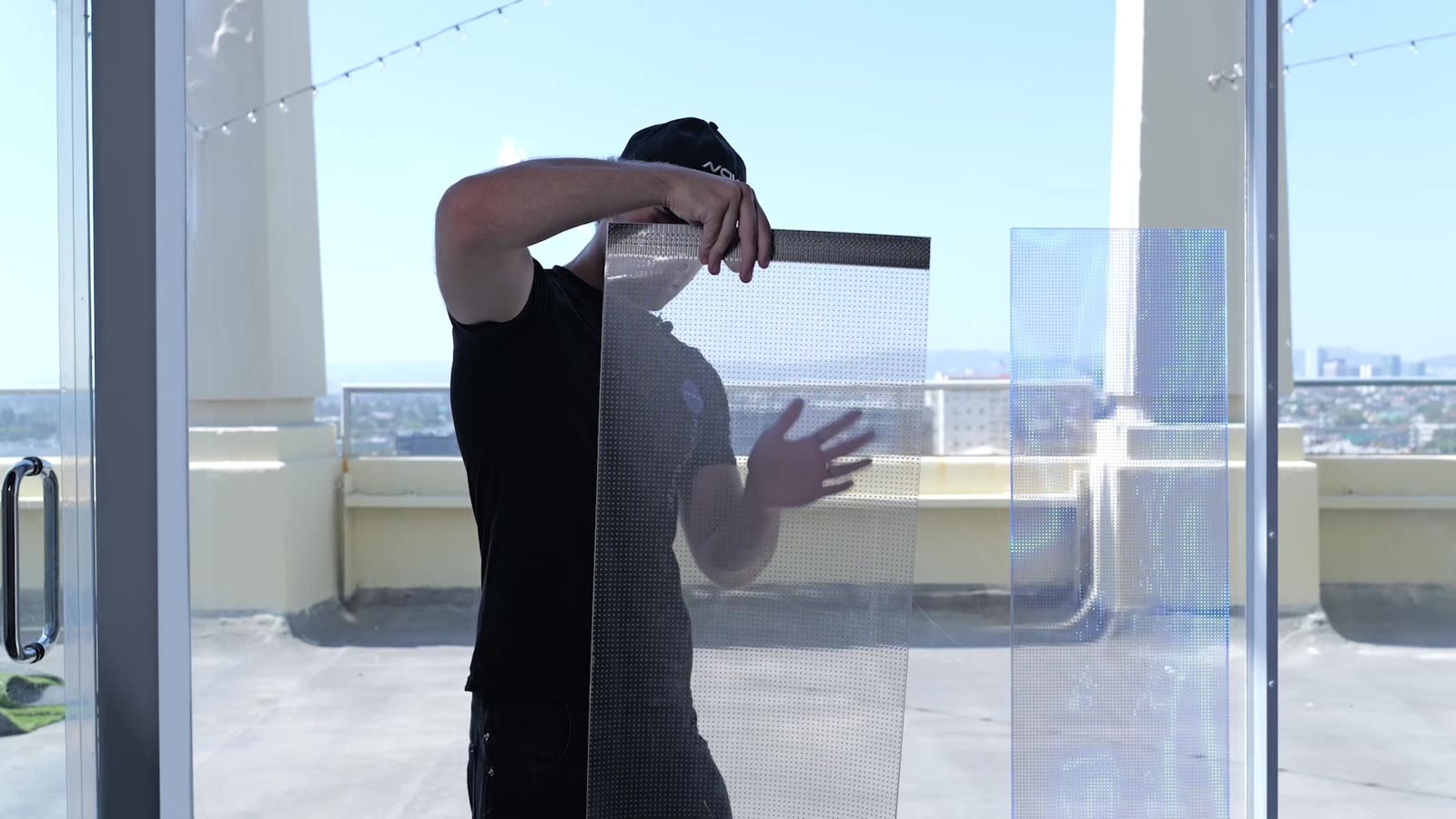
The biggest misconception about putting a video display on your storefront is that it means construction: crews, demolition, weeks of a boarded-up window. It doesn't — and the reason fits in one hand.
What actually arrives at your door
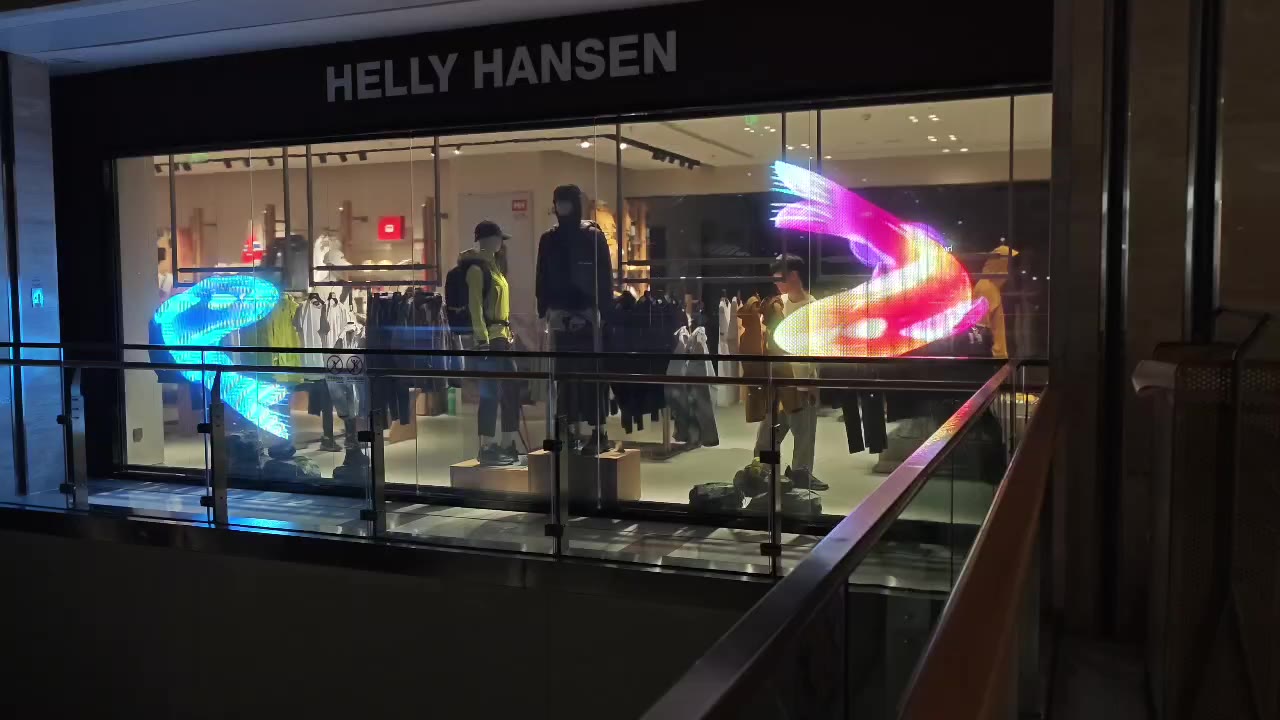
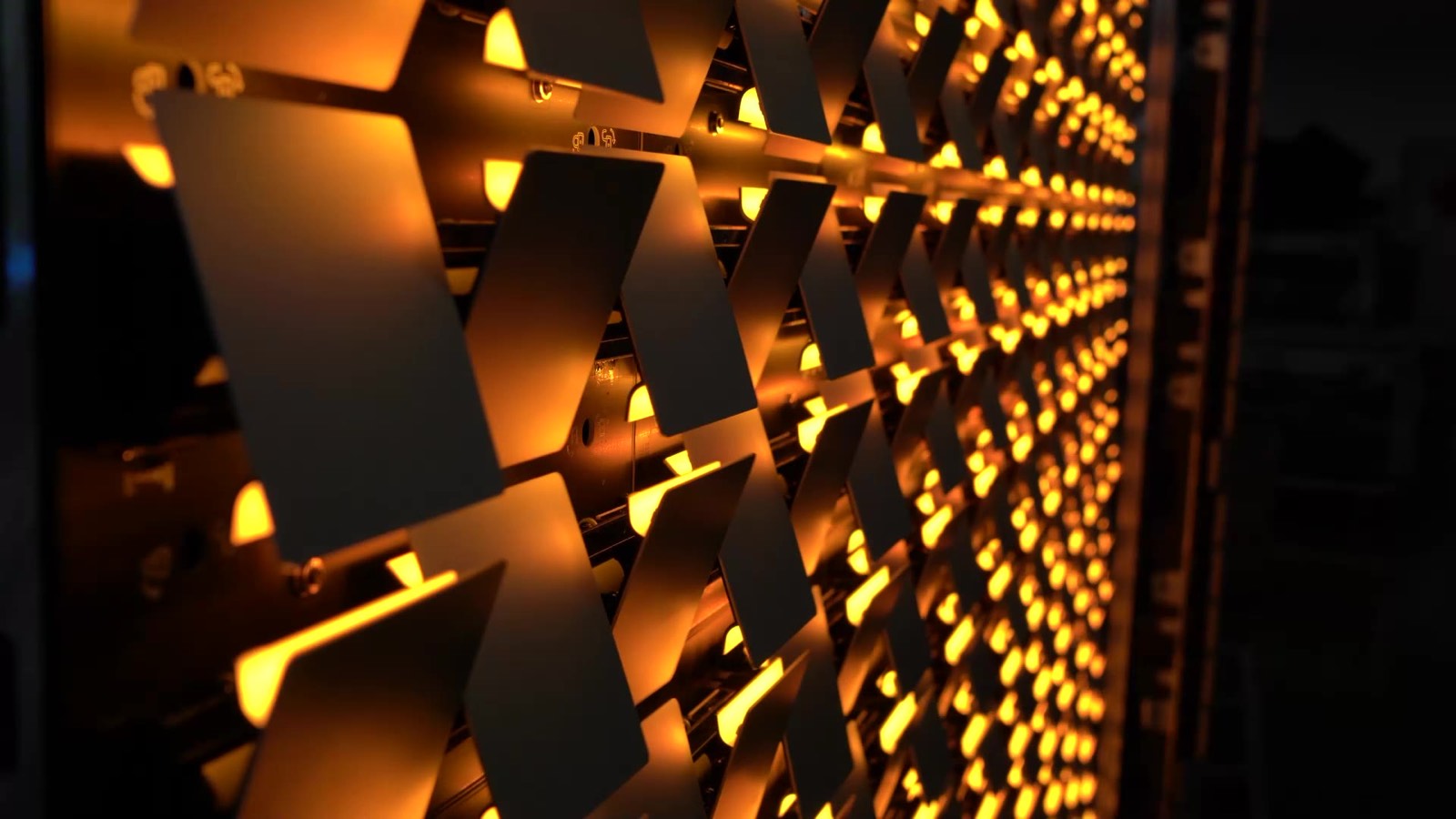
Transparent LED comes in two forms, and both are lighter than almost anyone expects. The film is thinner than a credit card — a flexible pixel layer that laminates directly onto the surface of your glass, following curves if your glazing has them. The mesh is an open lattice of LED strips: about 3 millimeters thick and roughly 3 kilograms per square meter, with over 80% visual transparency. One person can hold a panel in one hand.
That is the entire physical footprint of the display. There is no cabinet, no wall behind it, no structural frame bolted through your facade.
How installation day actually works
Every project starts before install day with a free site evaluation: we look at your glass, its framing, power access, and viewing distances, and confirm the right system. By the time hardware arrives, everything is engineered to your building.
On the day itself, the panels mount to the glazing you already have — laminated in the case of film, fixed to the glass or its frame in the case of mesh. Power comes from a standard supply, content is loaded and calibrated on site, and the display is commissioned the same visit. The work is measured in hours and days — not in weeks of construction.
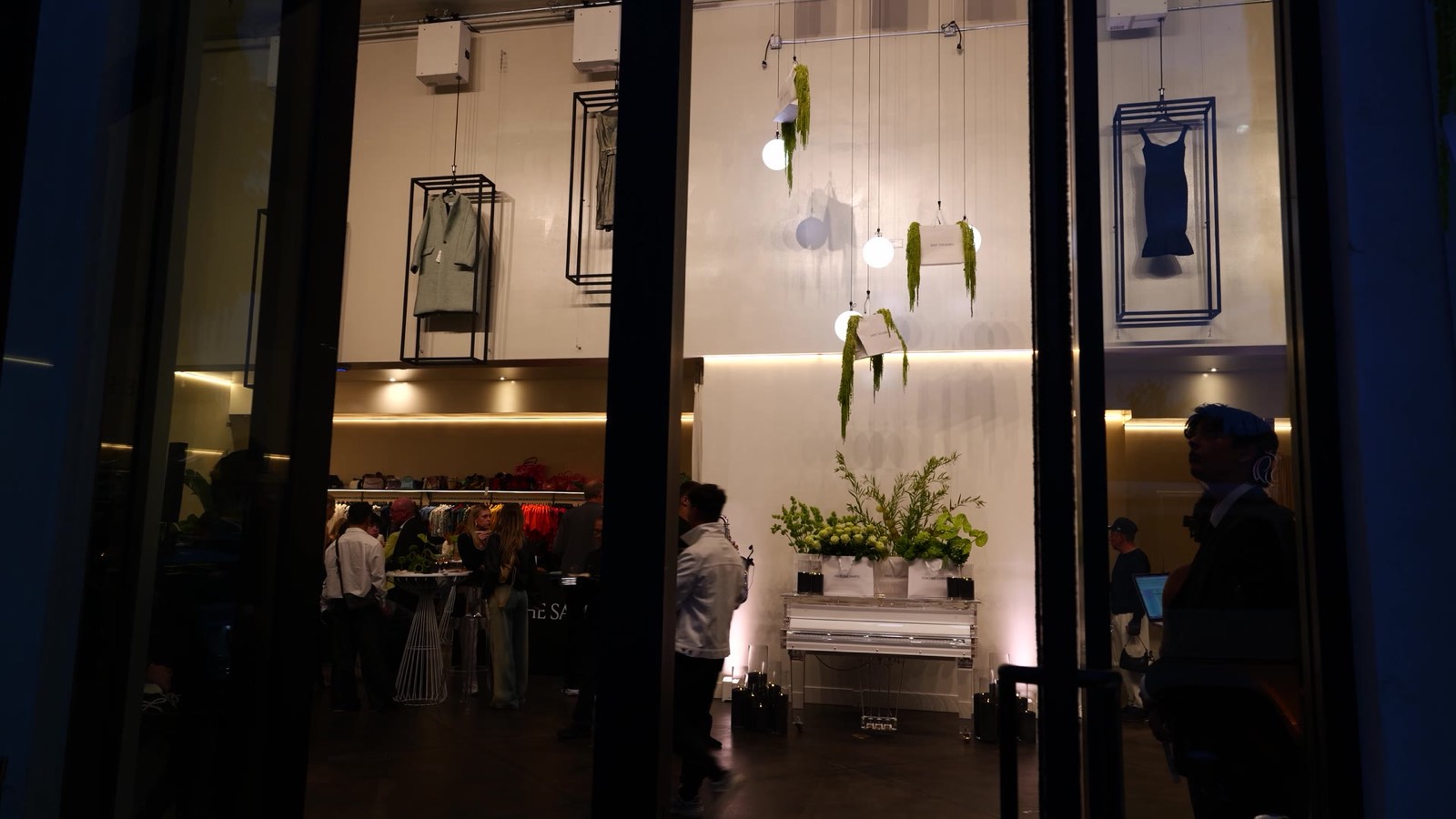
Your storefront never stops being a storefront: daylight keeps passing through, the interior stays visible, and when the content is off, the glass reads as glass.
When engineering still matters
"No construction" doesn't mean "no engineering." Large facades need structural review, exterior-mounted systems need wind and weather planning — we covered that in our guide to outdoor LED video installation — and street-facing displays can fall under city signage rules, which we walk through in LED facade permits in Los Angeles. That work is ours to handle: evaluation, engineering, permits coordination, installation, and calibration come as one scope.
One glass, four ways to light it
The lineup covers every storefront scenario: film or mesh as the technology, and single-sided or double-sided as the configuration — content facing the street, or playing both directions at once, toward the sidewalk and into the store. We are the first company to bring this full lineup of transparent LED systems to the US market, and matching the right combination to your glass is exactly what the site evaluation is for.
The short version
If your building has glass, it can have a display — without giving up the window, the daylight, or weeks of your storefront behind plywood. Send us a photo of your glass and its dimensions, and we'll tell you what it needs: film or mesh, one side or both, and what the install will actually involve. The evaluation is free.