
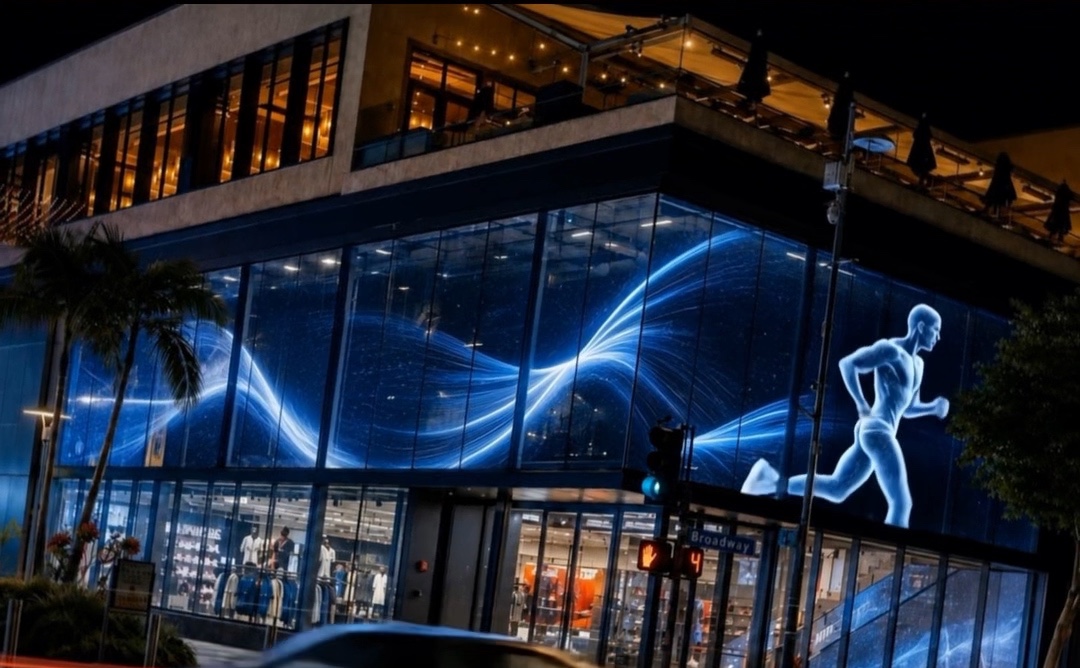
Every storefront owner who has watched a passer-by stop, look, and pull out a phone knows the window is the most valuable advertising surface the business owns. The question is what to put on it. Two technologies dominate the conversation, and they are almost opposites: the traditional LED wall, and transparent LED mesh. Choosing between them is really a choice about what your window is for.
This guide lays out how they actually differ, and which storefront situations favor each.
What an LED wall does
A conventional LED video wall is a solid, high-density panel — the same technology behind stadium screens and control-room displays, scaled to a storefront. Its strength is brightness and resolution: it is a screen, full stop, and a superb one.
The trade is total. A solid wall blocks whatever is behind it. Mounted in a window, it turns glass into a wall — the daylight, the sightline into the space, and the display of merchandise all disappear behind the panel. For a business whose interior is part of the pitch — a showroom, a restaurant dining room, a gallery — that is a steep price. For a business that wants a pure screen and does not care about the view through the glass, an LED wall is simply the right, cost-effective tool.
What transparent LED mesh does
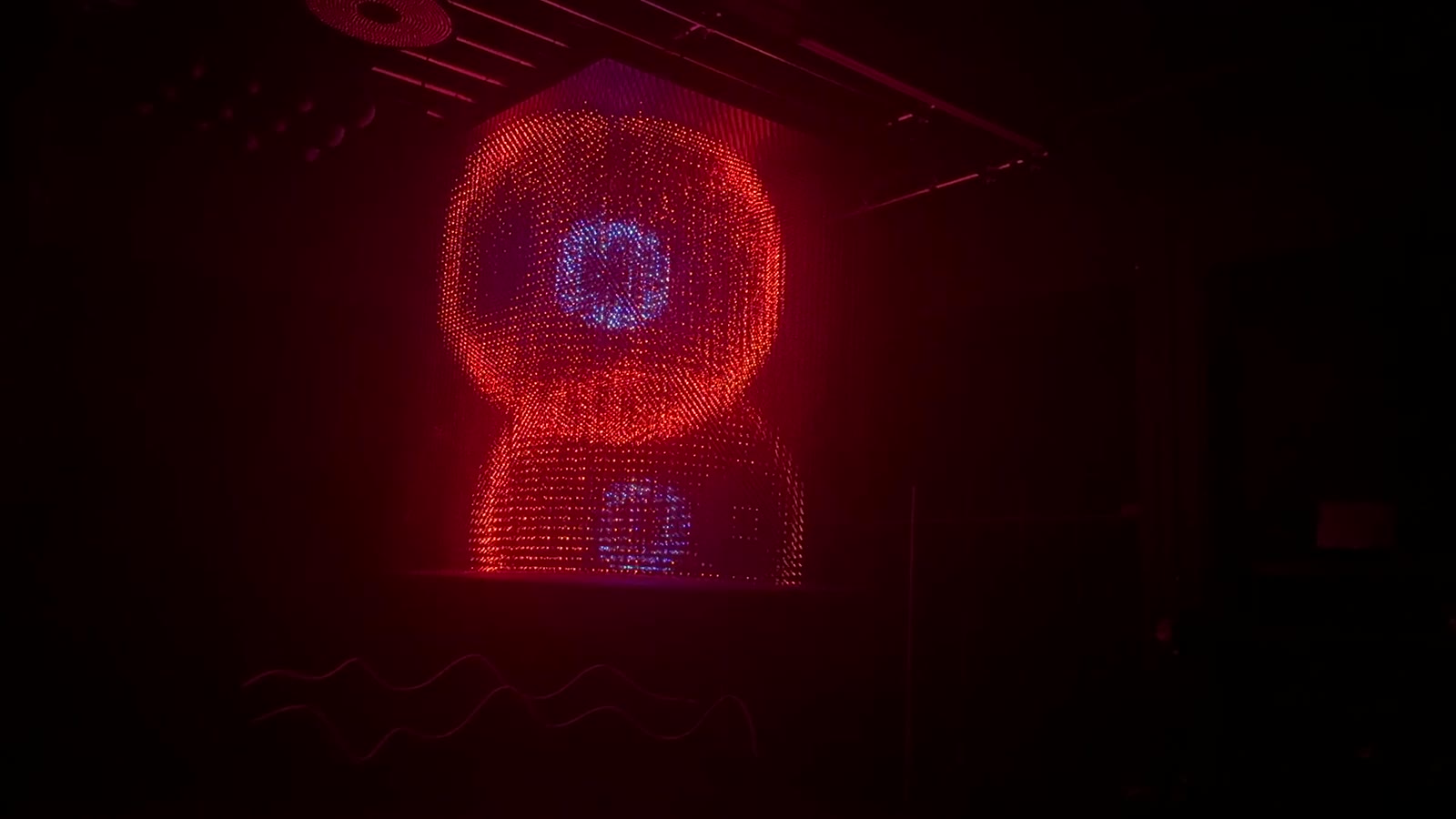
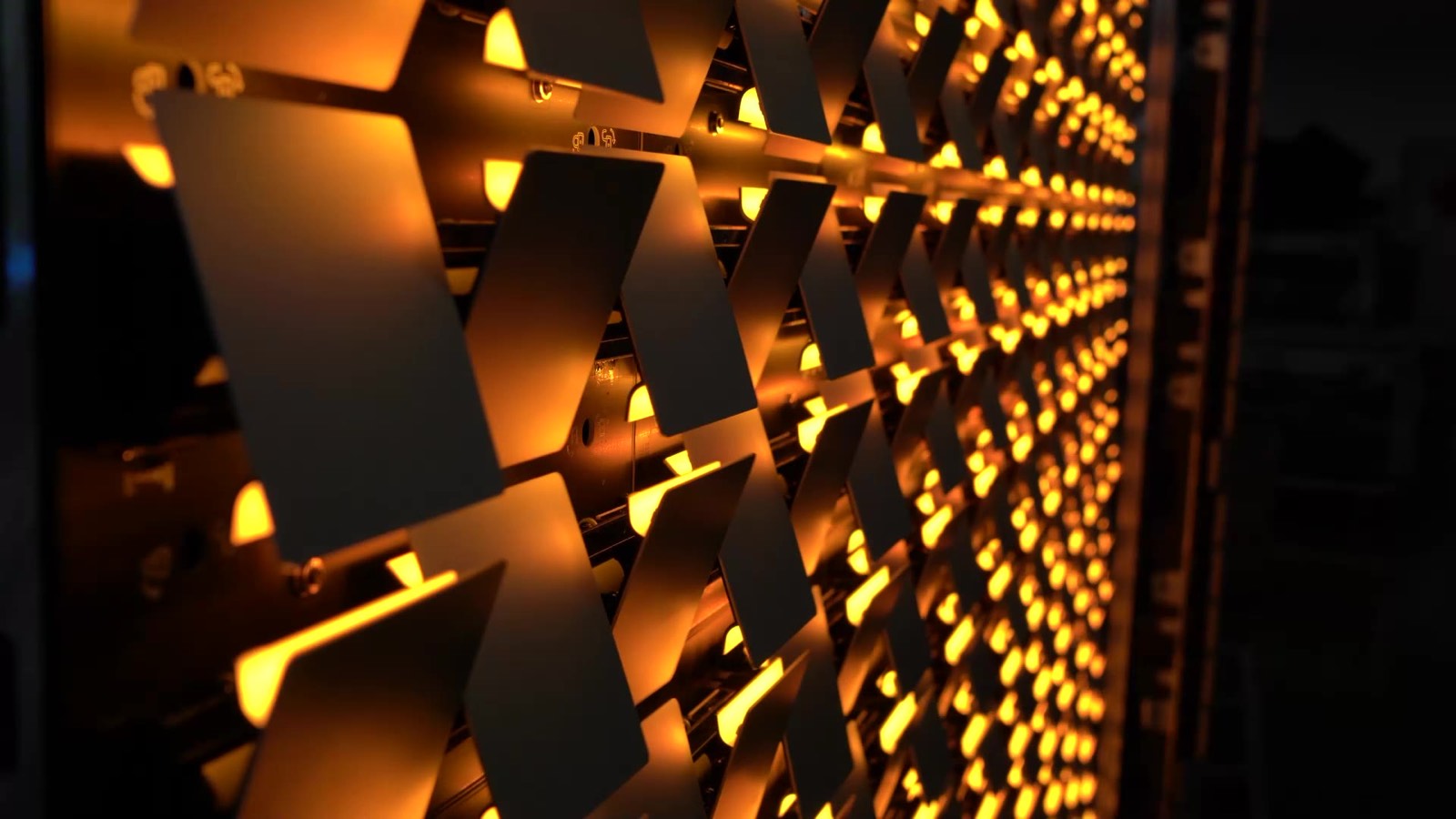
Transparent LED mesh takes the opposite approach. Instead of a solid panel, it is an open lattice of thin LED strips with most of the surface left empty, so air, daylight, and sightlines pass straight through. Our own mesh series holds visual transparency above 80% at 5,000–5,500 nits of brightness — full daylight readability — on modules about 3 mm thick and 3 kg per square meter, light enough to mount onto existing storefront glass without rebuilding anything.
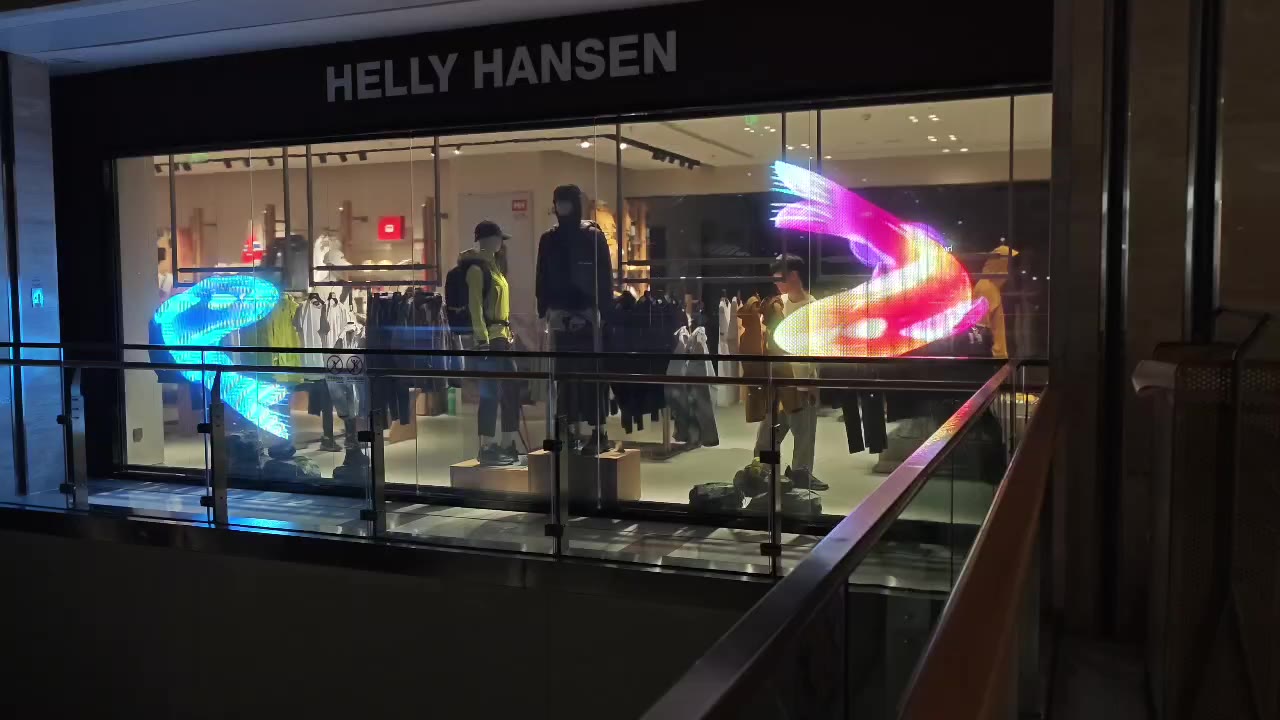
The result is a window that is a screen and still a window. Content plays across the glass while the store, the cars, or the dining room stay perfectly visible behind it. The building keeps its transparency and daylight; the glass simply gains a second job.
The cover photo of this article shows the trade working at night: a full corner facade playing wave content with a running figure — while the store below stays lit, stocked, and visible, and the restaurant terrace above keeps its own glow. That after-dark effect is exactly why dealership showrooms and flagship retail invest in this technology: the content becomes the attraction, and the lit interior reads as depth behind it.
The questions that decide it for a storefront
Does the view through the glass sell for you?
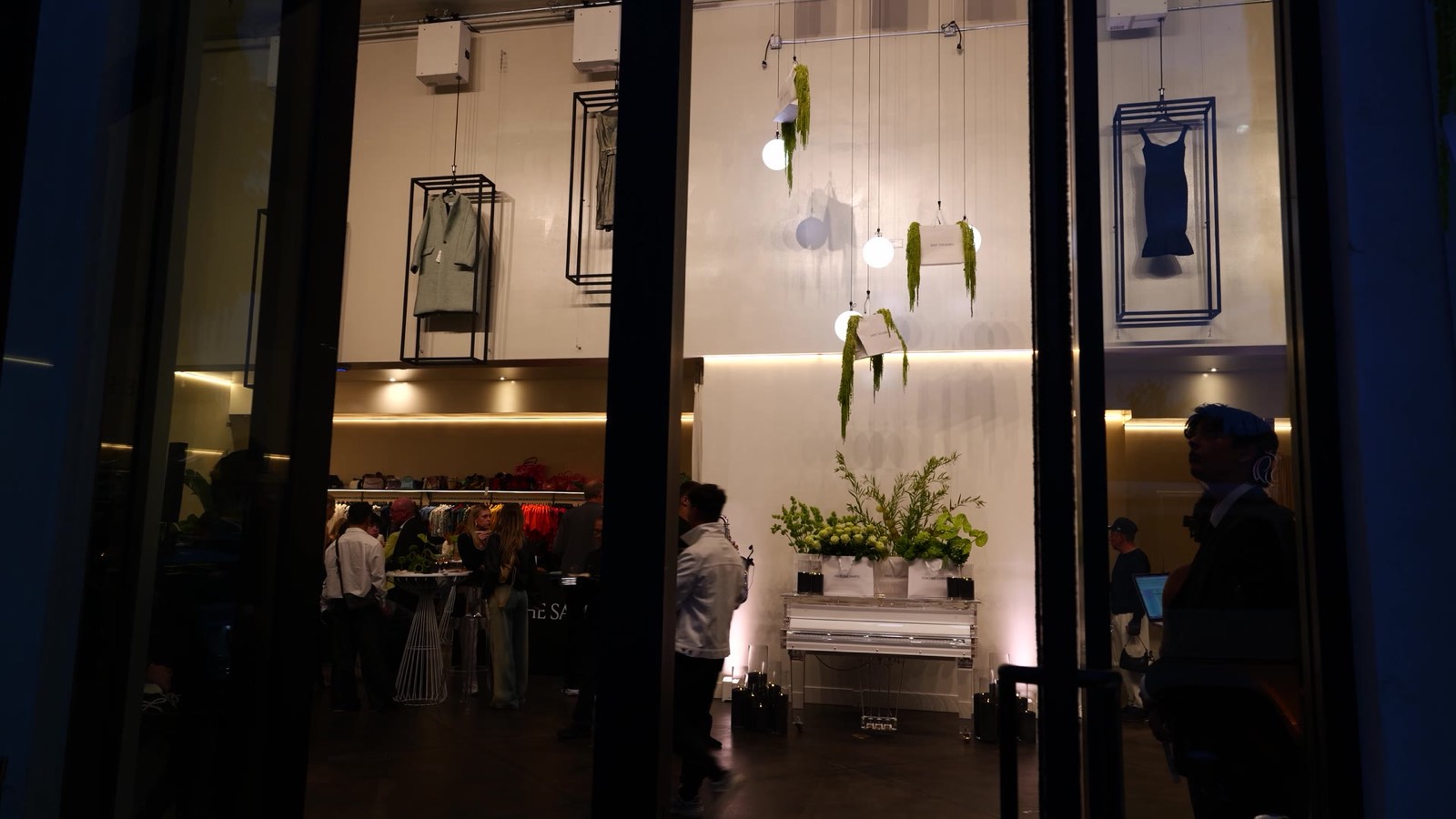
This is the whole decision in one line. If customers are drawn in by what they see inside — product, activity, ambience — you almost certainly want mesh, because a solid wall throws that asset away. If the interior is irrelevant to the sidewalk and you just want the brightest possible screen, a wall is defensible.
Daylight and the room behind
An LED wall darkens the space it covers; a storefront can lose a surprising amount of natural light to one. Mesh leaves the daylight essentially intact — the room behind the glass stays lit and open. For cafes, showrooms, and lobbies, that difference is felt every hour the sun is up, not just when the display is on.
Viewing distance and resolution
LED walls win on close-range sharpness. Mesh — ours is a P6.25 pitch — is engineered for viewing from roughly five meters and beyond, which is exactly how storefronts are seen: from the sidewalk and across the street, not pressed against the glass. Match the technology to the real distance and mesh reads beautifully; ask it to be a one-meter display and a wall is better.
What "off" looks like
When a solid wall is off, it is a black rectangle in your window. When mesh is off, the glass is just glass again — the store shows through as though nothing were installed. For a business that only runs content part of the day, that idle state matters more than owners expect.
The honest split
If your storefront's advantage is what happens behind the glass — and for most retail, hospitality, and showroom spaces it is — transparent LED mesh is usually the answer, because it adds a screen without subtracting the view. If you genuinely want a solid, maximum-brightness screen and the interior is beside the point, an LED wall does that job for less.
And if the deciding factor is budget: cost depends on your glass — above all its size — which we unpack in what determines the cost of a transparent LED display. The structural and electrical groundwork is covered in our pre-installation checklist.
The building itself usually settles it within one visit — glass, sightlines, daylight, and viewing distance rarely leave both options equally matched. That evaluation is where we begin, and it costs you nothing: request a site evaluation with your window dimensions, and we will tell you which system your storefront actually wants — including when the answer is a conventional wall.